

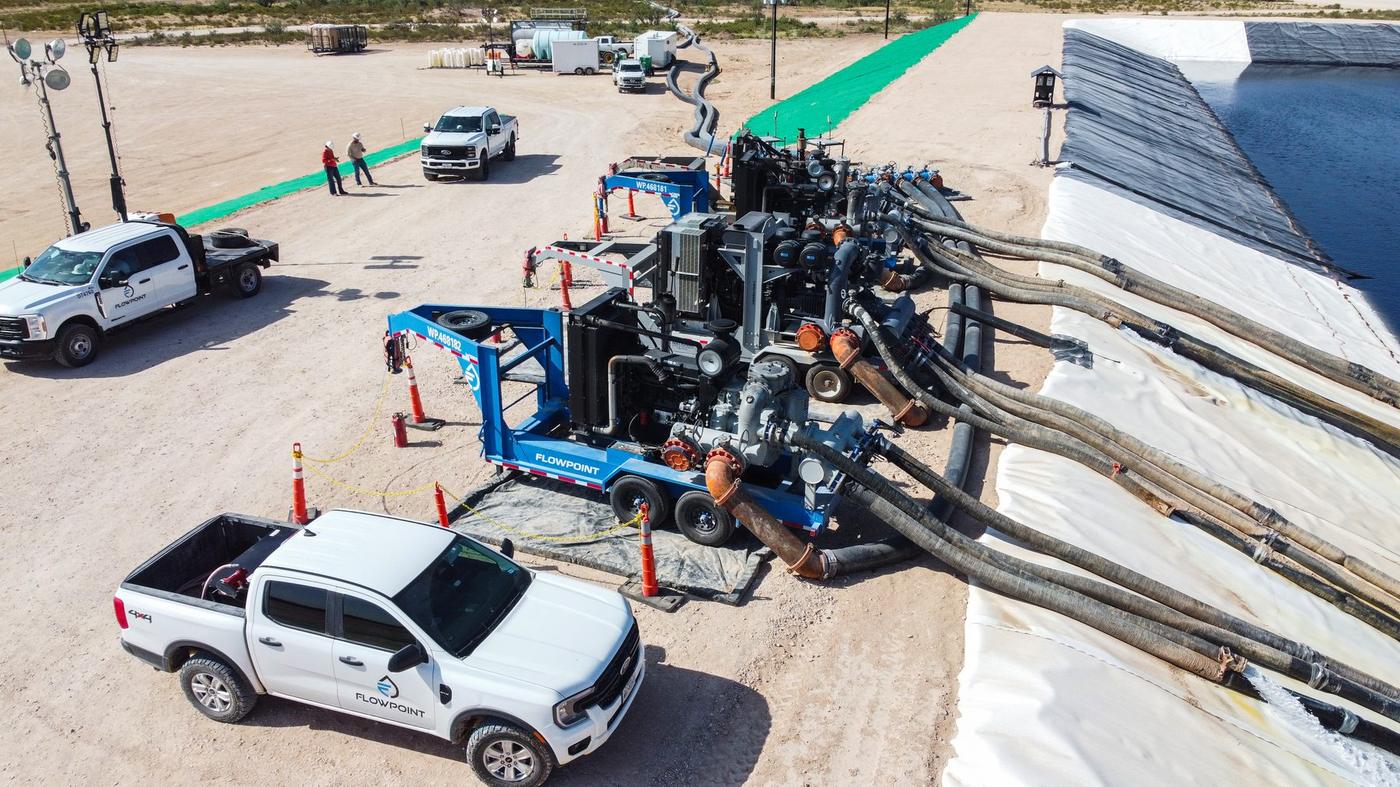
A frac consumes water faster than almost anything else on a wellsite, and it does not pause while somebody sorts out a supply problem. When water stops arriving, the pumps come down, and a completion crew, a wireline crew, and a pump-down crew all stand still at the same time.
That is the entire stakes of water transfer. It is a support service until the moment it is the critical path, and by then it is too late to fix the design.
Here is how water actually reaches a frac in the Permian Basin, and why the systems that hold up are built around redundancy rather than raw capacity.
Source, pit, frac — three legs, three different jobs
Water transfer gets named by its endpoints, and the names describe genuinely different scopes of work:
- Source to frac — water moves from its origin, typically fresh water wells, straight to the location.
- Pit to frac, or pond to frac — water is drawn from a storage pit that has already been filled, and moved to location.
- Pit to pit — water is repositioned between storage, usually to stage volume closer to where it will be needed.
The distinction matters because it determines what has to be in place before a frac starts. Source to frac means the supply and the transfer are the same operation. Pit to frac means the pit is a buffer that somebody already filled, and the transfer job is about drawing it down at rate.
On a large completion, more than one of these is usually running at once.
Why the pit exists
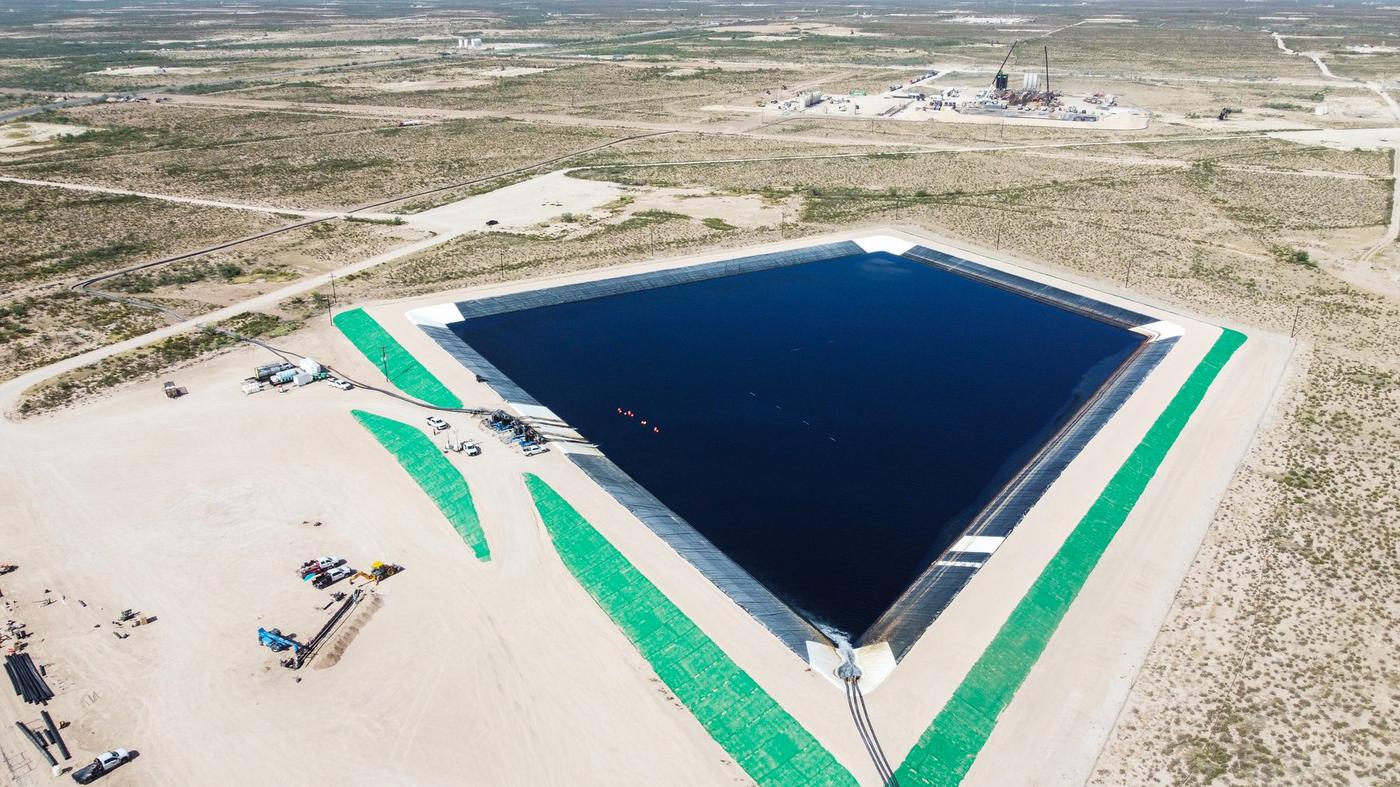
It is tempting to think of the pit as where the water is. It is more accurate to think of it as where the water is staged.
The pit decouples supply from demand. Wells and gathering lines fill it at a steady rate. The frac draws from it at a much faster one. Without that buffer, supply and consumption would have to match minute for minute, which nothing in the field does reliably.
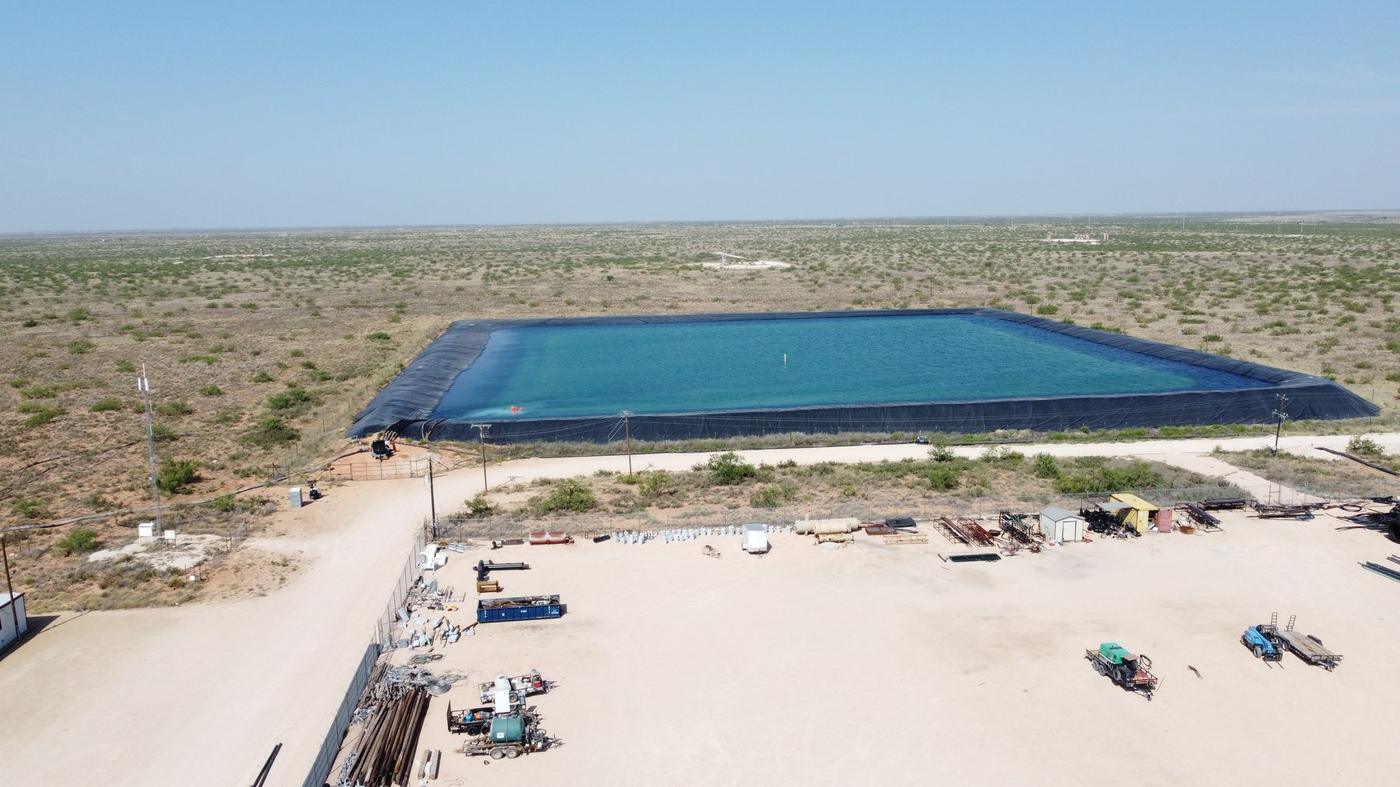
Distance from the pit to location varies. Two miles is common. Four is not unusual. Where the pit sits is a function of geology, land access, and what was negotiated — not convenience.
Where routing happens: the manifold
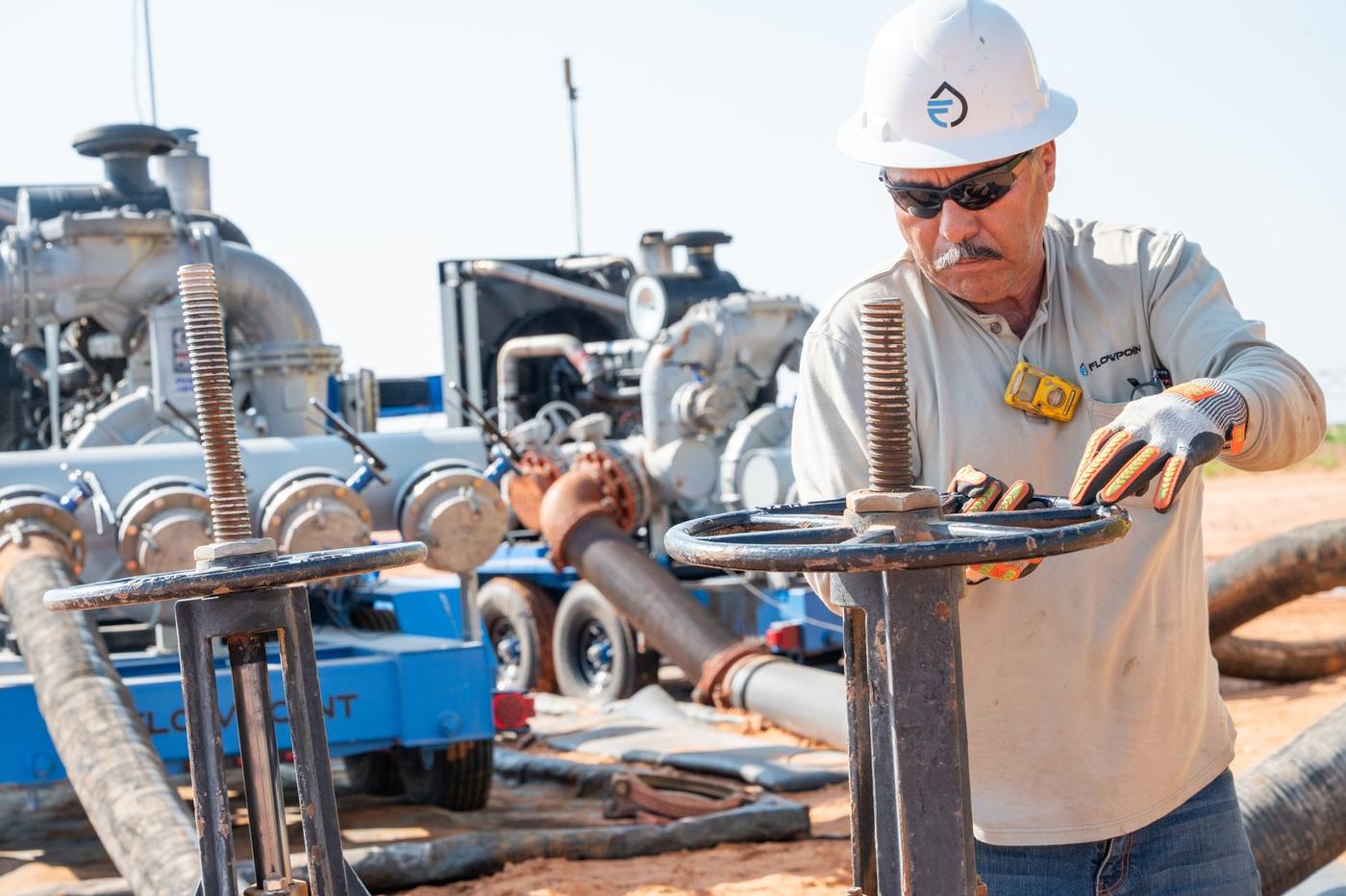
Every line in the system converges at a manifold — a bank of valves controlling where water goes and how much goes each way.
Functionally it is a switchboard. Open a valve and a line goes live. Close one and it comes out of service. Ports not in use are capped with blind flanges, sitting there for a configuration that needs them.
The manifold is the reason a system can be reconfigured without shutting down. If a line has to come out of service — damage, a repair, a change in the job — that gets handled here, and water keeps moving through the remaining paths while it happens.
It is not a glamorous piece of equipment. It is the difference between a problem and an outage.
Why more than one line
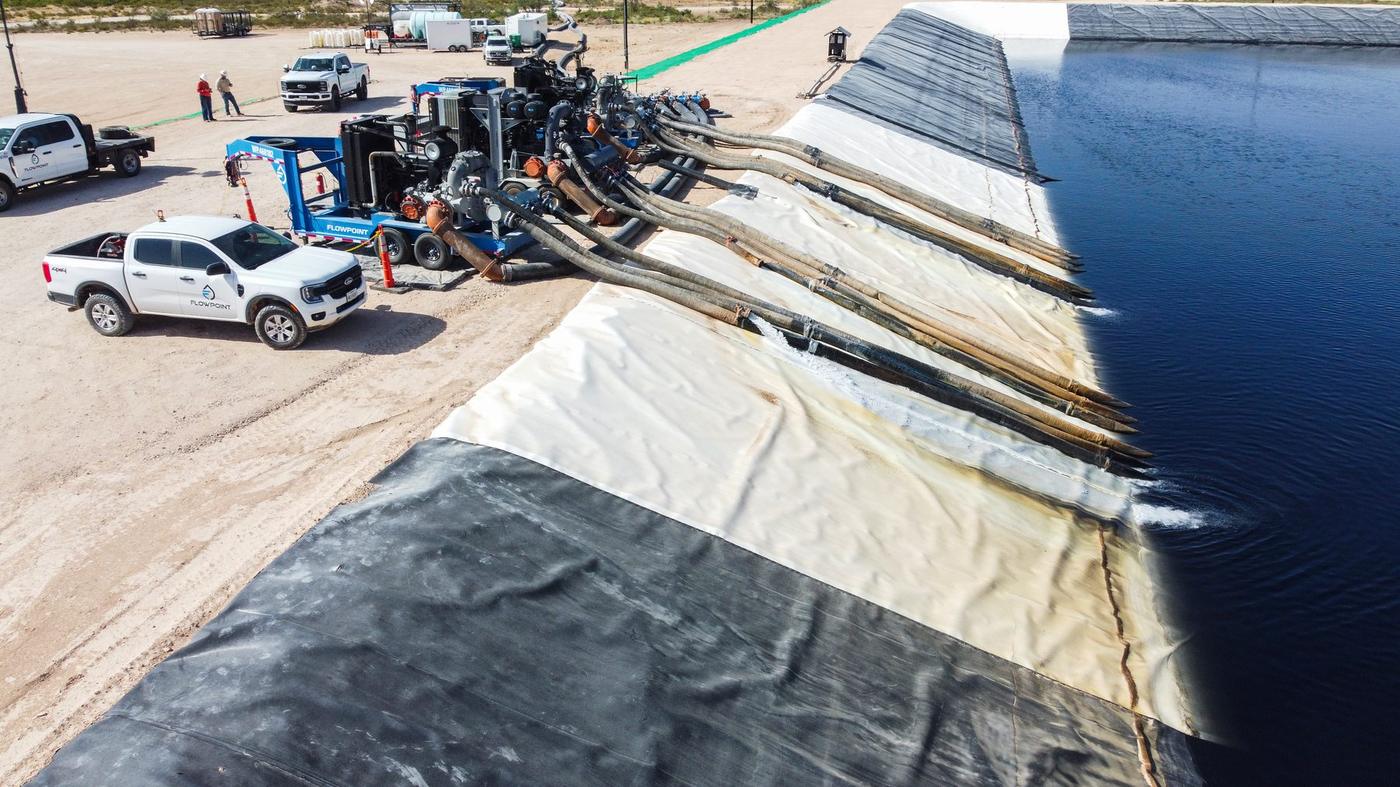
The first reason is rate. A frac can consume water faster than any single practical line wants to carry, so volume gets split across multiple runs.
The second reason is the one that matters more: a single line is a single point of failure.
Line gets damaged. A crossing gets compromised. Something gets hit. Over a job running for weeks across miles of ground shared with traffic, equipment, and weather, the question is not whether something goes wrong — it is whether the system was designed on the assumption that it would.
With multiple lines carrying, losing one is a reduction in capacity. With one line carrying, losing it is a stopped frac.
That is the entire argument. It is not complicated, and it is the difference between a transfer system that holds up and one that only looks adequate on paper.
Why more than one pump
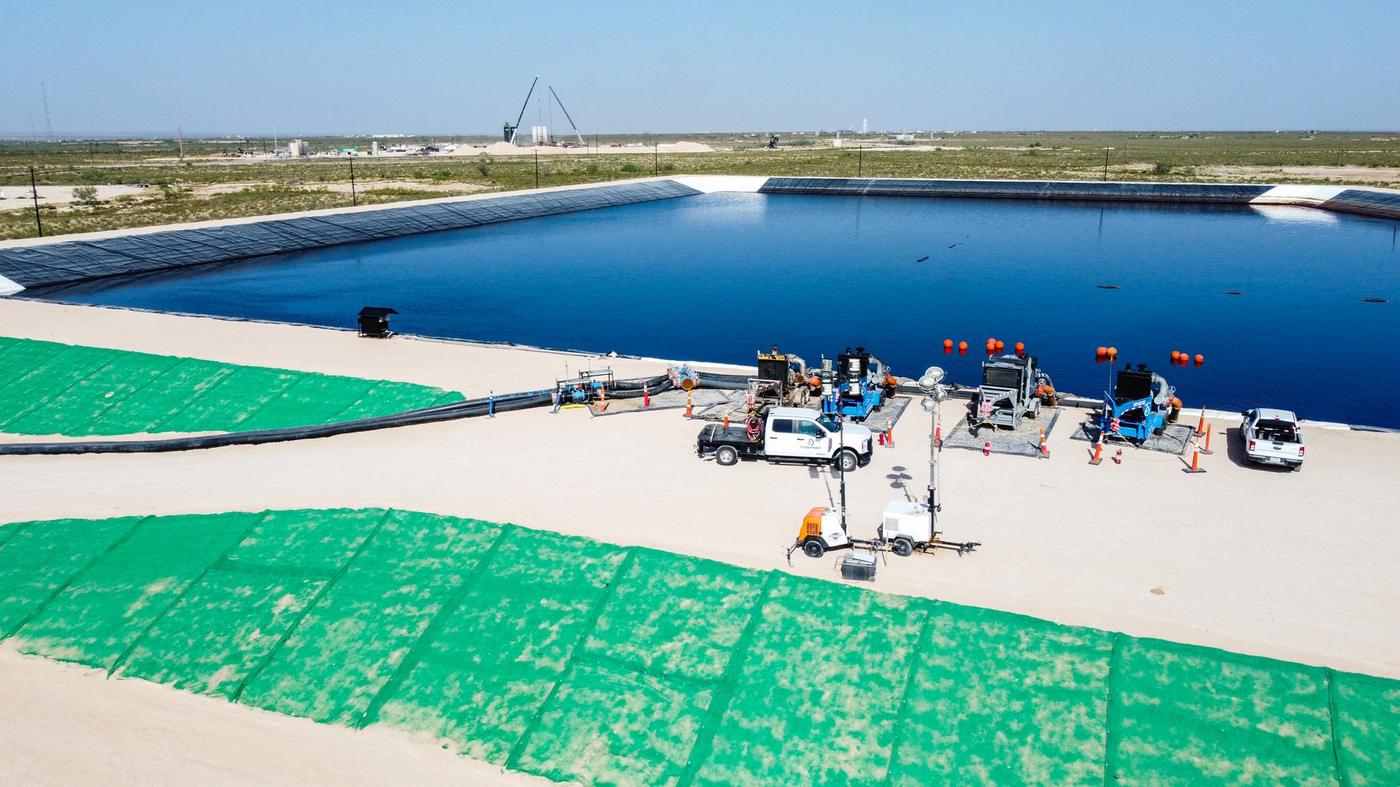
The same logic applies to the equipment moving the water.
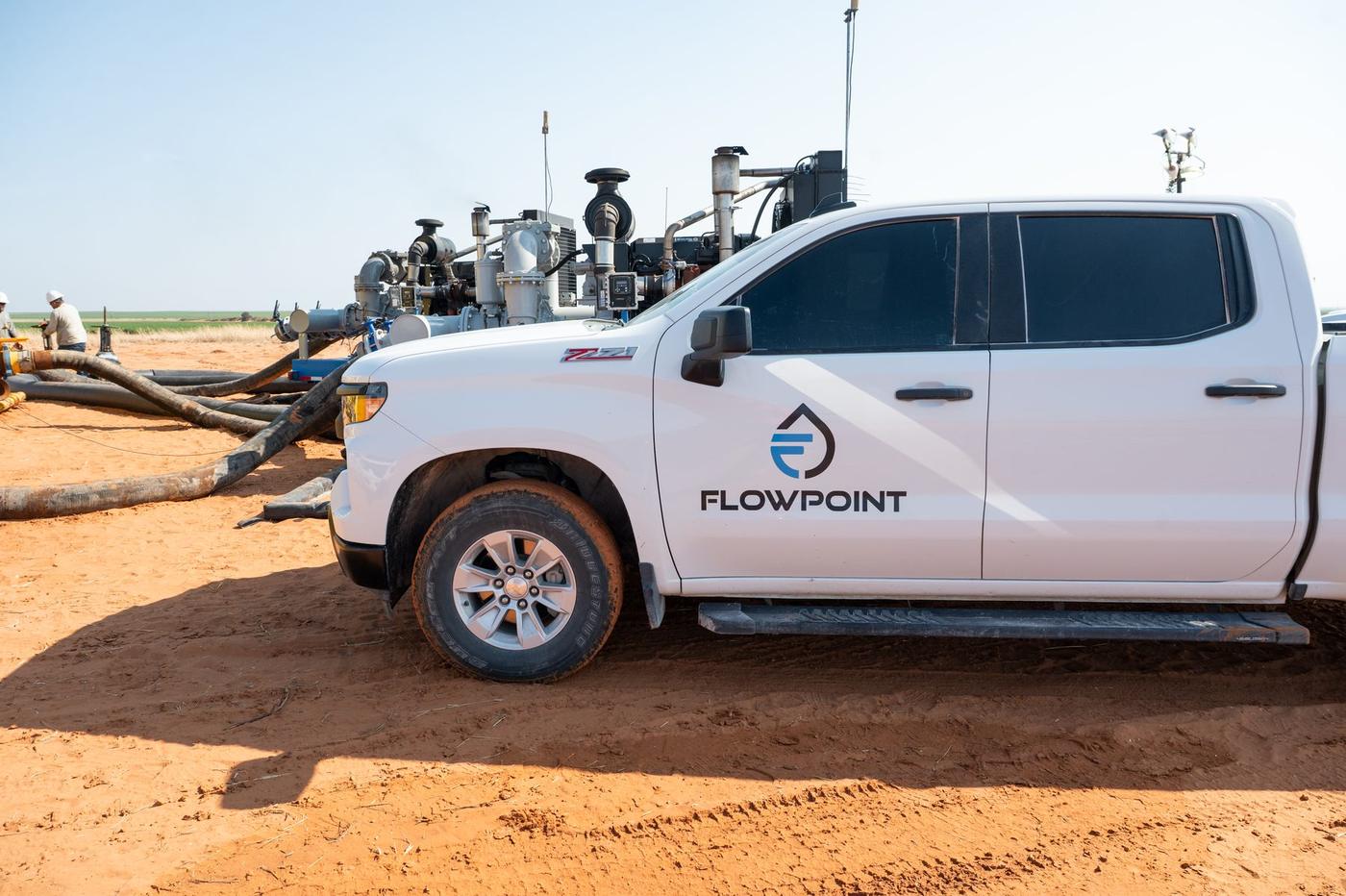
Pumps run continuously in heat, dust, and vibration for weeks at a time. They are reliable. They are not infallible. A system built with exactly enough pumping capacity to meet the requirement is a system where any single mechanical failure becomes an operational one.
Built correctly, losing a pump is an inconvenience handled by the crew on site. Built to the minimum, losing a pump is a phone call to the company man.
The cost difference between those two configurations is small. The cost difference between those two outcomes is not.
Two ways to get it wrong
Transfer is governed by two failure modes that pull against each other, and the job is staying between them for weeks at a stretch.
Fall behind and the frac starves. Storage on location is measured in tanks holding a few thousand barrels each — a buffer of minutes to hours, not days. If supply drops below draw, that buffer empties, the pumps come down, and several crews are standing still while somebody finds the problem. That is the expensive failure.
Push too hard the other way and water goes over the top of a tank. Now it is a spill, a cleanup, and a reportable event.
Neither is exotic. Both are entirely preventable with the right design and the right attention.
Somebody is watching it
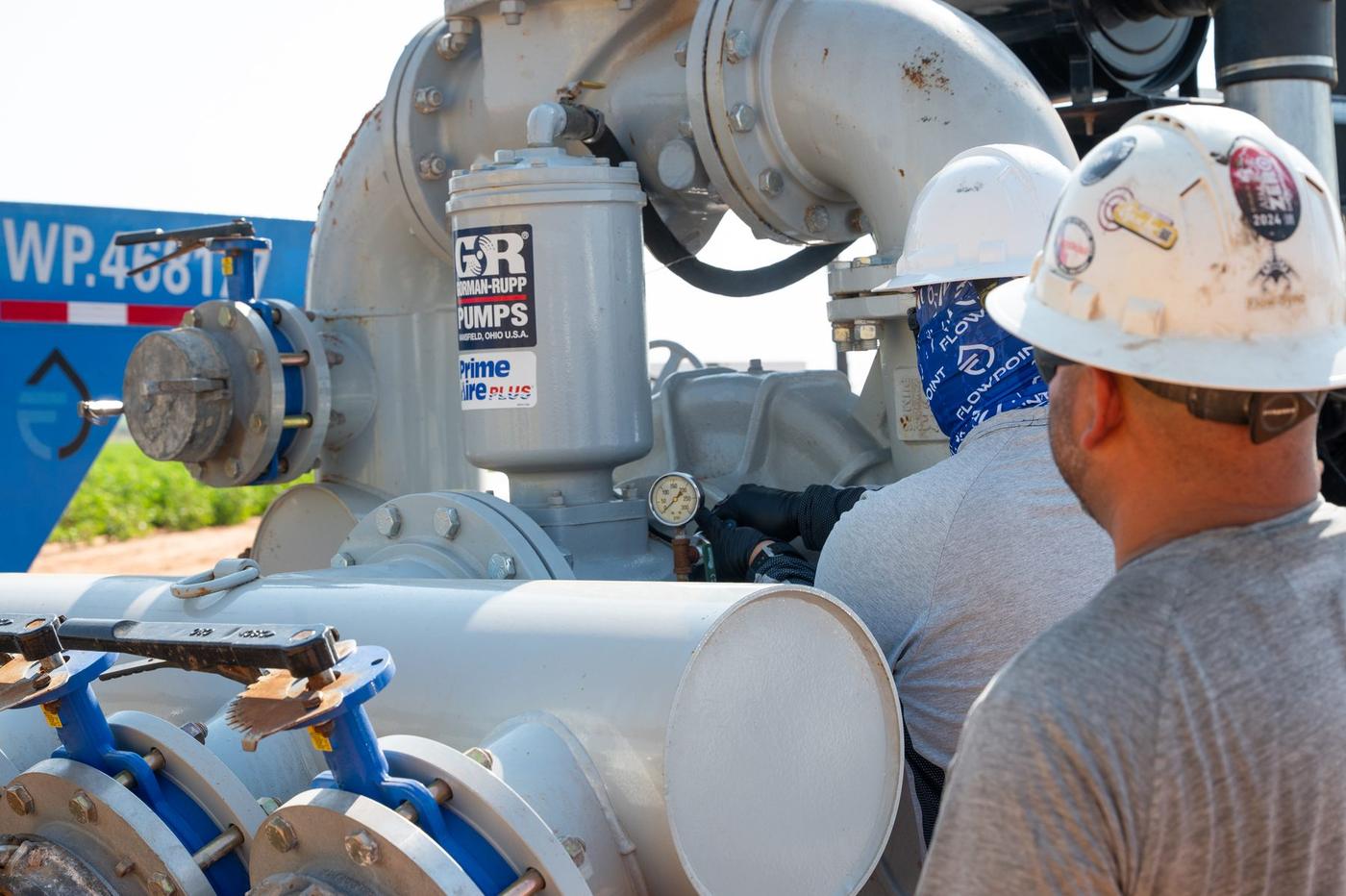
Continuous operation requires continuous attention. Not a walk of the line at shift change — actual visibility on what the system is doing at every hour, including the ones nobody wants to be awake for.
Instrumentation handles the watching. People handle the judgment. A reading that moves in the wrong direction is data; knowing whether it means a developing problem or a normal fluctuation is experience. Systems that work well have both, and the ones that fail usually turn out to have been short on one of them.
The ground in between
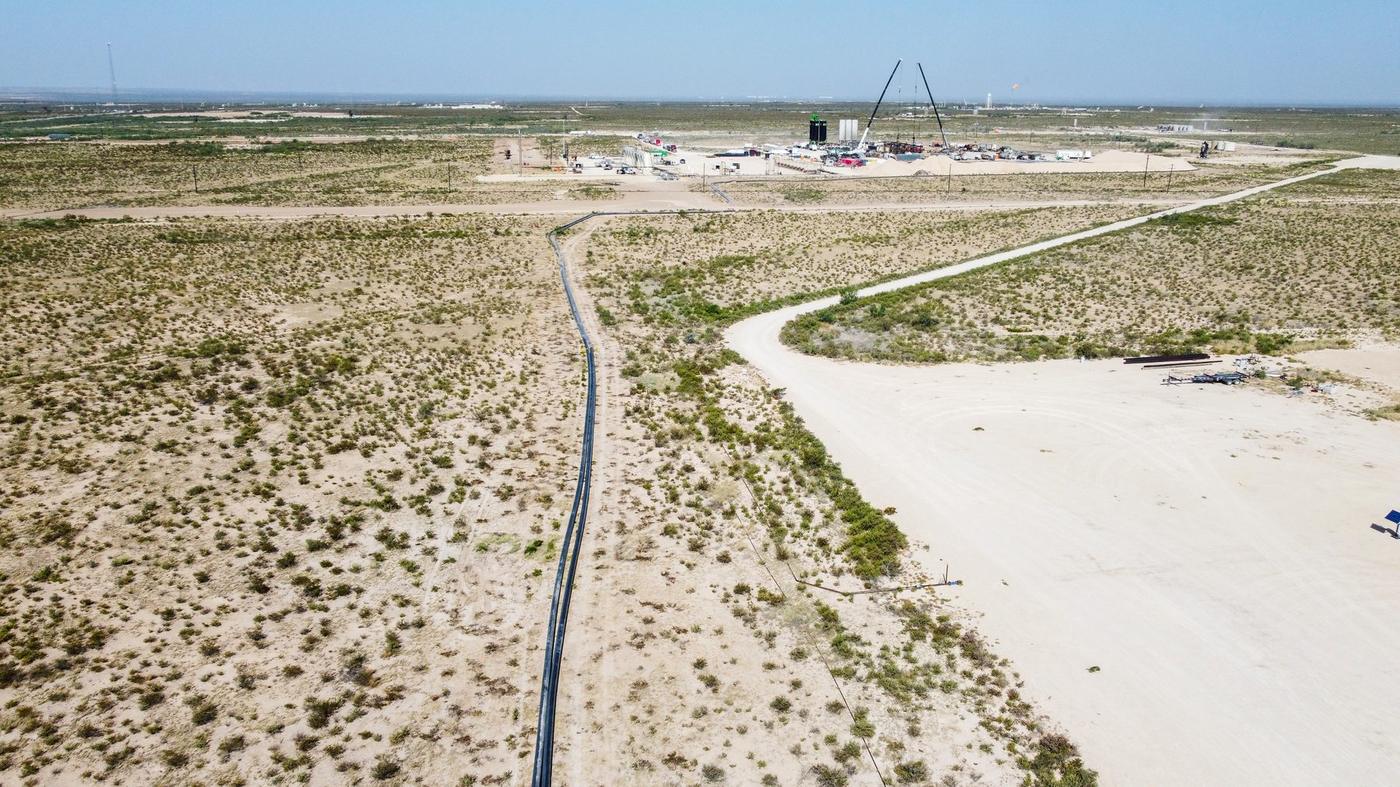
Between the pit and the location is several miles of line running across ground that belongs to somebody — a landowner, an operator, or the state.
Road crossings have to be permitted in advance, and in Texas anything on state right-of-way goes through TxDOT with a size limit that often forces a job to run several smaller lines rather than one large one. Landowners need access preserved. Crews that treat that part of the work as paperwork create problems that outlast the job.
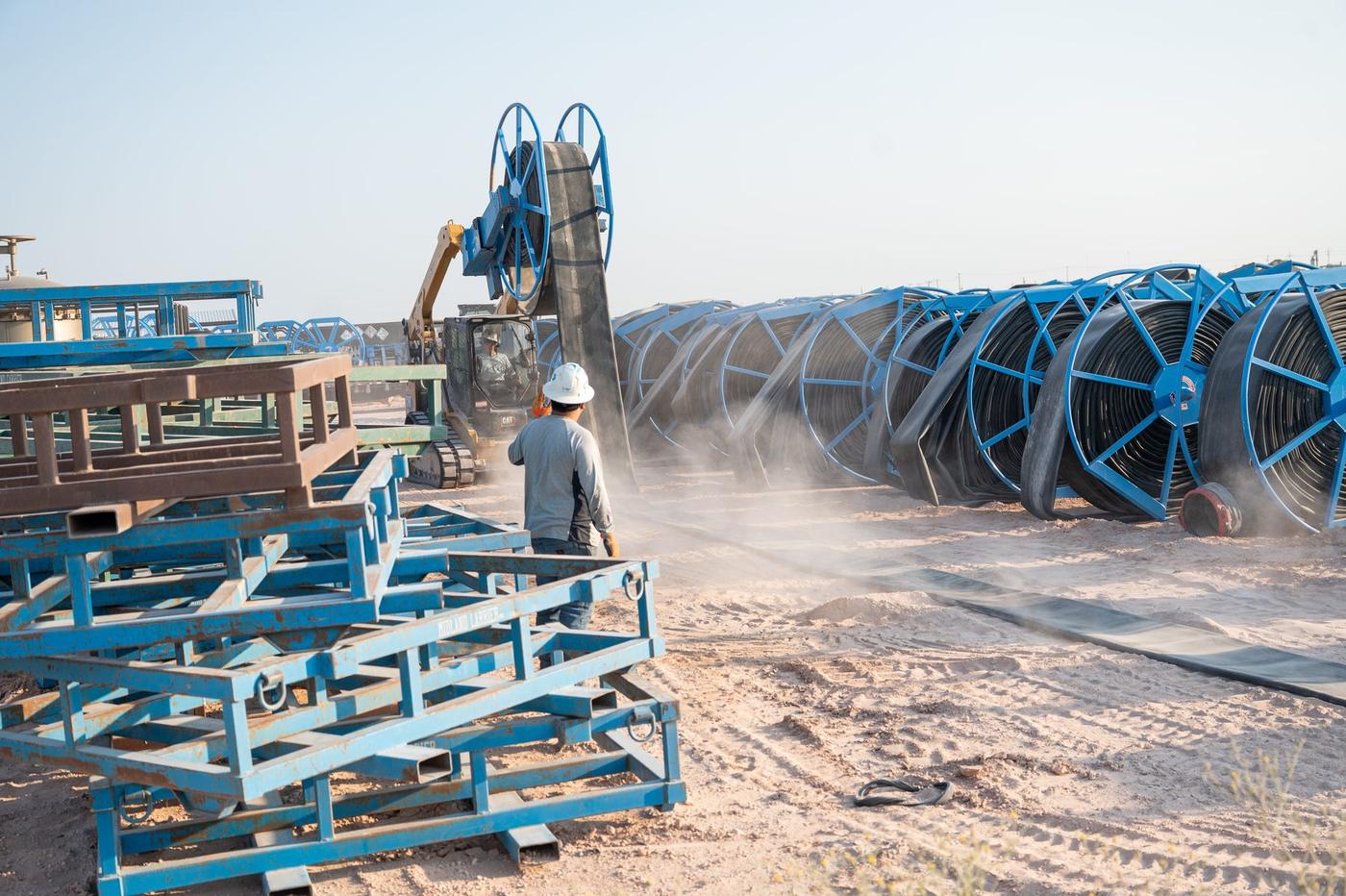
It is also worth stating what piped transfer replaces. The alternative is hauling: tankers running lease roads and highways one load at a time, with a queue at the location and a load count to reconcile at the end. Piped transfer removes the trucks, removes the queue, and takes a meaningful amount of traffic off roads everybody out here shares.
What to ask a transfer provider
If you are evaluating who moves water on your next completion, four questions get you most of the way:
- What happens when a line goes down mid-job? If the answer involves stopping, that is your answer.
- Is there pumping capacity beyond the minimum requirement? Ask specifically. Everyone says yes until you ask how much.
- Are crossings permitted before mobilization? Permitting after the fact is a schedule risk wearing a different name.
- Who is watching it at three in the morning? Continuous operation requires continuous attention.
The bottom line
Frac water transfer is judged by one standard, and it is not throughput. It is whether water was ever the reason the job slowed down.
Meeting that standard means designing for the failure instead of the average — more than one line, more than one pump, and a manifold that lets a crew work around a problem without shutting anything off.
Done right, nobody upstream ever thinks about it. That is not a lack of impact. That is the product.
Flowpoint Services handles water transfer, pit management, and continuous monitoring across the Permian Basin. If you have a completion coming up and want to talk through the water side of it, we are in Midland.
.svg)

