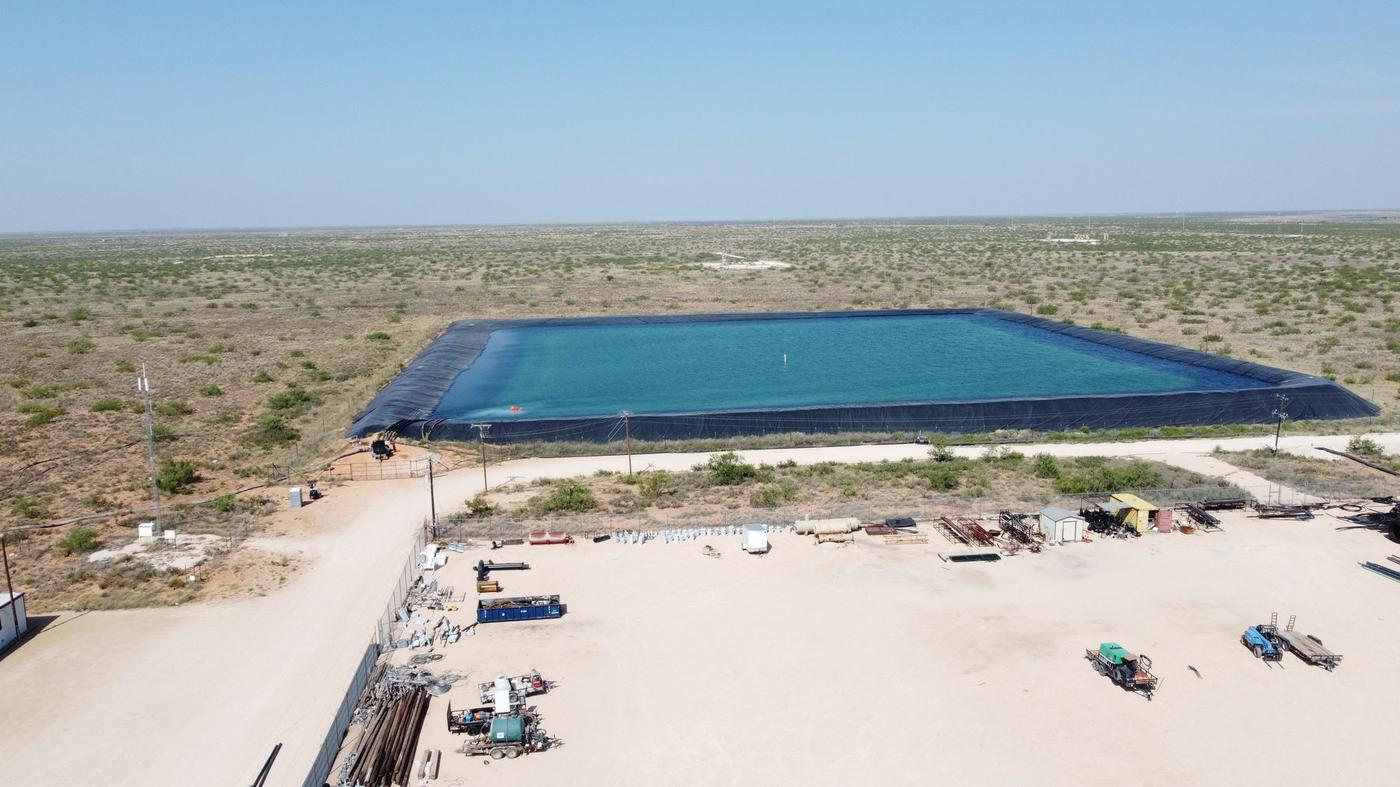
Ask where frac water in West Texas comes from and the honest answer is mostly the ground. Surface water is scarce, recycled produced water is growing but not everywhere yet, and the gap is filled by water wells: on the operator’s lease, on a neighbor’s, or on a landowner’s who has decided water is worth more sold than left alone.
Groundwater sourcing looks simple from the outside. A well, a pump, a line, a pit. In practice, it is a chain of steps that each take time, and the timeline is the part that gets operators into trouble. Here is how it actually works.
Step One: Know Who Governs the Water
In Texas, groundwater belongs to the surface owner under the rule of capture, but that does not mean anyone can pump whatever they want. Most of the Permian sits inside a groundwater conservation district, and each district sets its own rules on well permitting, spacing, production limits, and reporting. Some are light-touch. Some are not. The district that governs the well you want to use determines how fast you can be pumping, and it is the first phone call, not the last.
Across the state line in New Mexico, groundwater is administered by the Office of the State Engineer, and the rules are different again. An operator working both sides of the line is working two systems.
Step Two: Test the Well Before You Count On It
A water well is only a source if it produces what you need, when you need it, at a quality you can use. Three things get tested up front.
Yield. How many gallons per minute the well sustains over hours, not the burst it gives in the first ten minutes. A well that shows 400 gallons a minute on a short test and settles at 250 over a day is a 250-gallon-a-minute well.
Quality. Total dissolved solids, chlorides, and anything else that will affect the frac chemistry. Groundwater across the Permian ranges from nearly fresh to brackish enough to need treatment. Knowing which one you have determines whether the water goes straight to the pit or through on-the-fly treatment first.
Recovery. How fast the well comes back after it has been pumped hard. On a multi-well supply, recovery determines how many wells it takes to hold the rate.
Step Three: Landowner Agreements and Access
The well sits on someone’s land. The line to the pit crosses someone’s land, often several someones. Each of those relationships needs an agreement before the first stick of pipe goes down: water purchase terms, surface use, access for the crew, and restoration when the job is done. These conversations move at the pace of the people having them. Starting them the week before the frac is how a supply line ends up waiting on a signature.
Step Four: Match the Conveyance to the Source
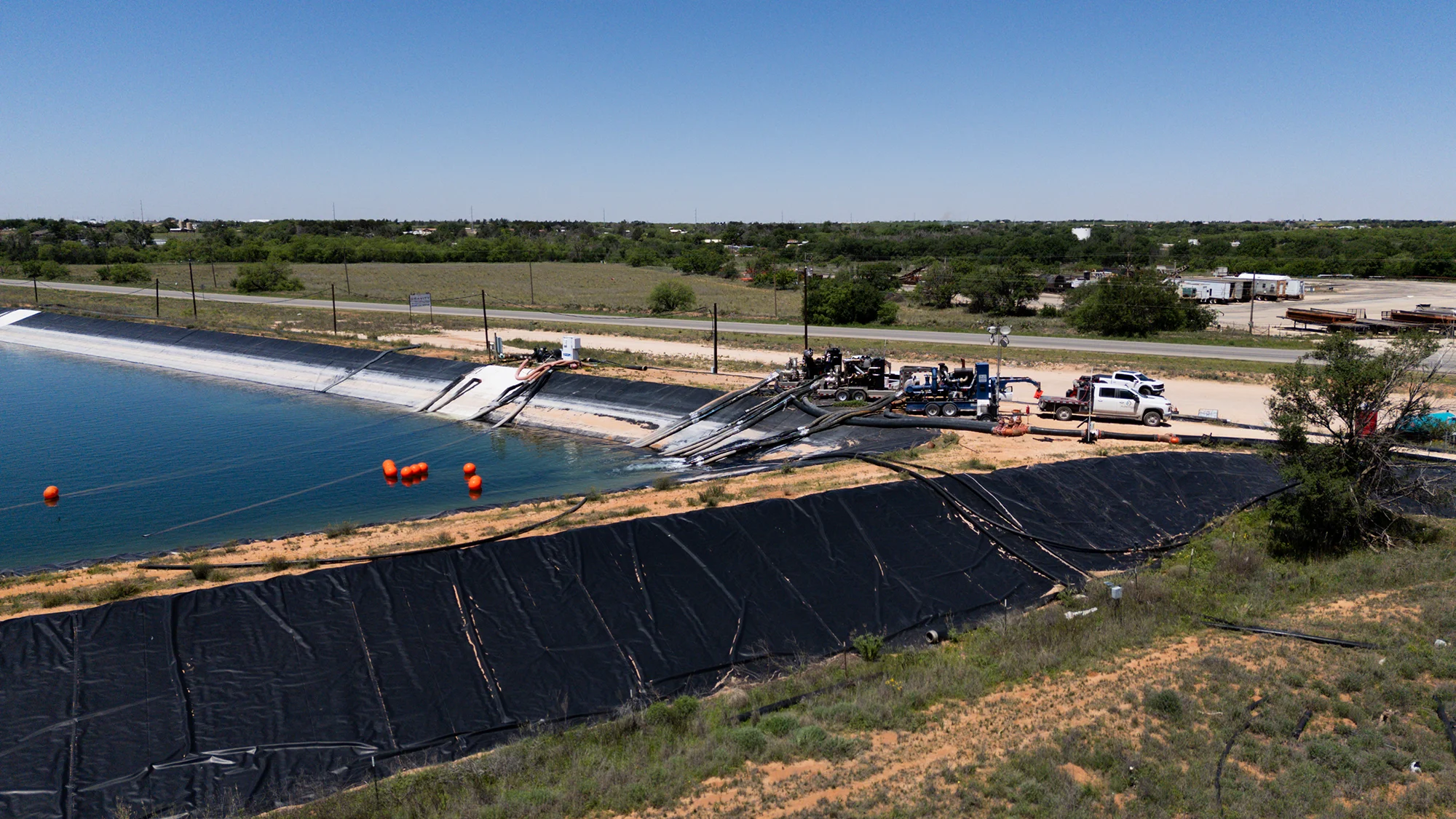
This is where the sourcing decision meets the transfer decision. A single well producing a few hundred gallons a minute over a long haul is a 4-inch poly pipe job: fusion-joined, surface-laid, metered at the source, left in place for the duration. A field of wells feeding a large pit ahead of a SimulFrac may need a larger poly mainline with layflat handling the last mile.
Getting this sizing right is the difference between a supply that hums and a supply that spends its life at the edge of the pump curve.
Step Five: Meter It, Monitor It, Manage It
Once water is moving, both sides need to know how much. A meter at the source settles the invoice and catches a drop in well output before the pit runs low. Continuous monitoring on the line catches pressure changes that mean a leak, a blockage, or a pump problem, and it does it at 2 a.m. when nobody is standing next to the pump.
Why the Timeline Is the Whole Problem
None of these steps are hard. All of them take time, and they run in sequence. District permitting, well testing, landowner agreements, and line installation together can take weeks before the first barrel moves. Operators who start sourcing when the completion is scheduled routinely find that the water is the long pole. Operators who start it when the completion is planned do not.
The Bottom Line
Groundwater is the workhorse of Permian frac supply, and sourcing it well is a matter of sequence: district first, well test second, landowners third, then pipe sized to the source, then a meter and a monitor. Flowpoint handles that chain end to end, from source identification through the line to the pit.
Flowpoint provides water sourcing (fresh water, produced water, and water swaps), poly pipe installs, transfer, and full-cycle water management across the Permian Basin. Get in touch.