

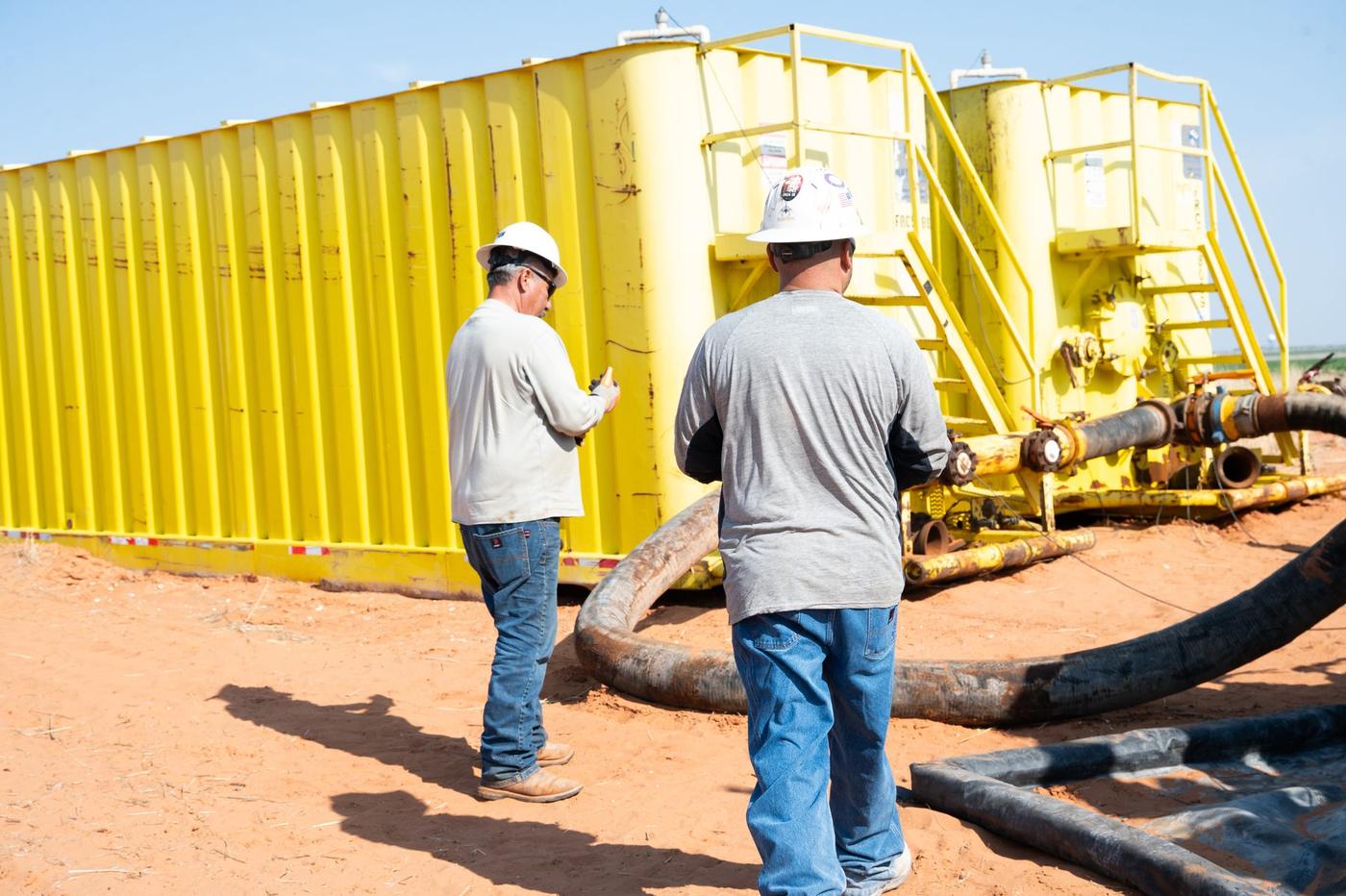
Every water transfer contractor in the Permian Basin will tell you safety is their first priority. Most of them have the banner to prove it. The banner is not the point.
Safety culture is what a crew does at 3 a.m. when nobody from the office is watching and the schedule is tight. It is a set of habits that hold under pressure, and like a well-laid line, it is visible if you know where to look. Here is what it looks like on a Flowpoint location, and what an operator should expect from anyone moving water on their pad.
Safety Culture Starts Before the Truck Leaves the Yard
The most important safety decision on a water transfer job is made before anyone arrives. It is who gets sent.
Flowpoint runs a dedicated crew on every project, from quote to completion. The same people who walk the route lay the line, and the same people who lay the line run it. That continuity is a safety control as much as a service one. A crew that has been on the job since the first day knows where every valve is, which crossing has the soft shoulder, and which low spot fills with water after a rain. The crew that shows up cold to relieve them does not.
Dedicated crews also mean accountability has a face. When one team owns the job start to finish, there is no handoff where the details fall through.
The Monitor Comes to the Meeting
Hydrogen sulfide comes with produced water, and produced water is what Flowpoint moves. At our safety meetings, one rule is not negotiable: every crew member brings their H2S monitor. Not “it’s in the truck.” Not “the office has spares.” On you, at the meeting, the same as it is on location.
The reason is simple. A monitor that is not on your body is not protecting you, and a monitor that has not been checked is a guess. Bringing it to the meeting means it gets looked at, bump-tested, and worn by habit rather than by reminder. Habits are what hold at 3 a.m.
Field Teams With the Authority to Make the Call
Safety programs fail at the point where a crew member sees a problem and does not feel they can stop the work. So Flowpoint’s field teams have the authority to make the call. If a lead sees a line that is not right, a pressure reading that is moving the wrong way, or a crossing that has changed since the walk-through, the job pauses. They do not wait for permission from Midland.
That authority is only real if the company backs it after the fact, every time. Ours does. A crew that stops a job over a legitimate concern is doing exactly what they are paid to do, and the cost of that pause is nothing next to the cost of the event it prevented.
Recognition That Is Earned Every Month
Flowpoint recognizes a Safe Driver each month. Driving is the most common way people in the oilfield get hurt, and the roads between Midland, Monahans, and Carlsbad see the same trucks and the same traffic every day. Recognizing the people who do it right, month after month, is not a morale exercise. It keeps the standard visible.
Verified, Not Self-Reported
Flowpoint is ISNetworld and PEC verified. For operators, that means our safety program, training records, and compliance documentation have been reviewed against your requirements by a third party, not summarized by our sales team. Dedicated safety and compliance resources keep those records current between audits, and our safety and training lead runs the training that puts them into practice.
What an Operator Can See From the Road
An operator does not need to audit a program to get a read on a crew’s safety culture. Four signals show from the truck:
- Monitors on bodies, not on dashboards.
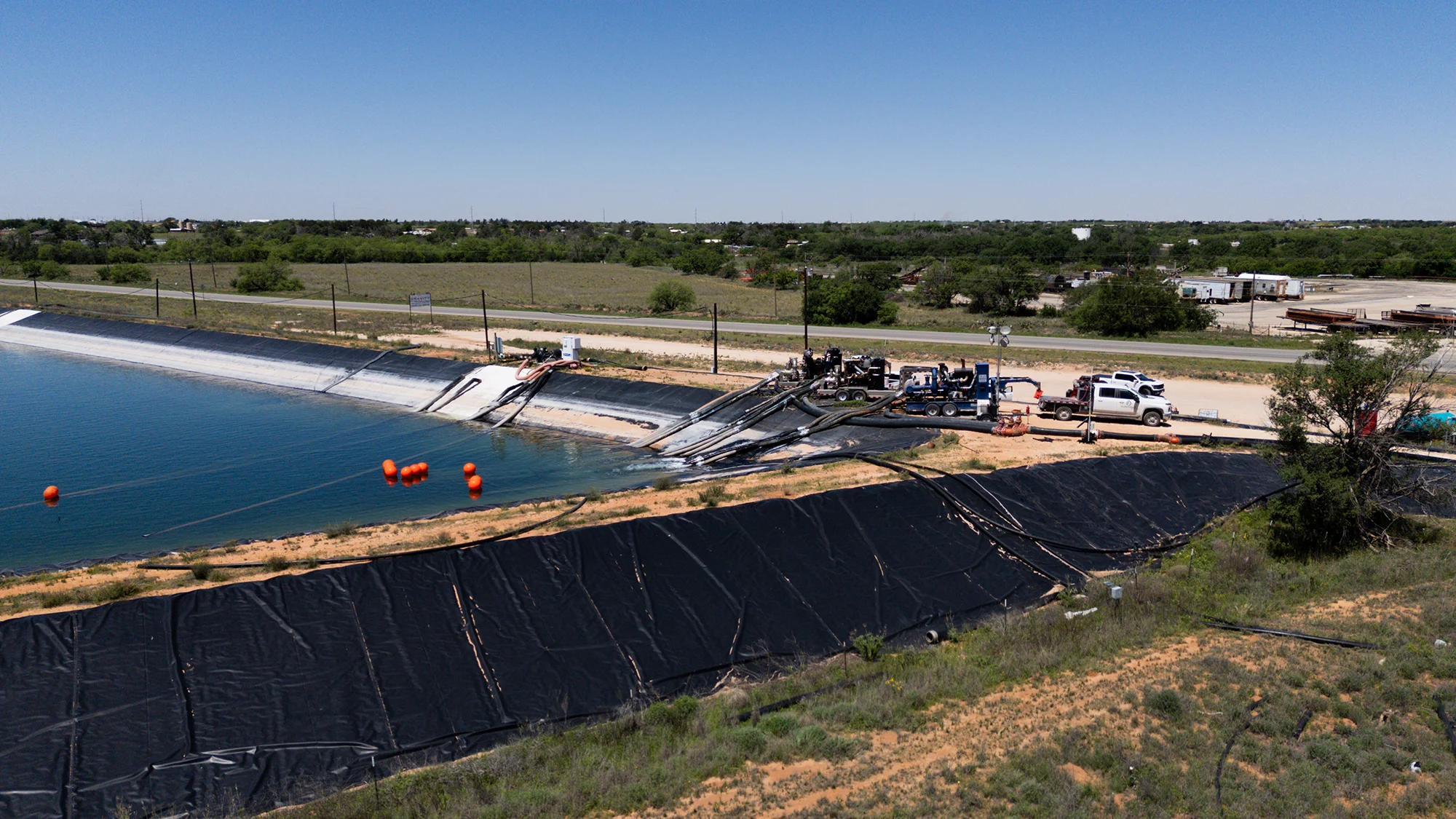
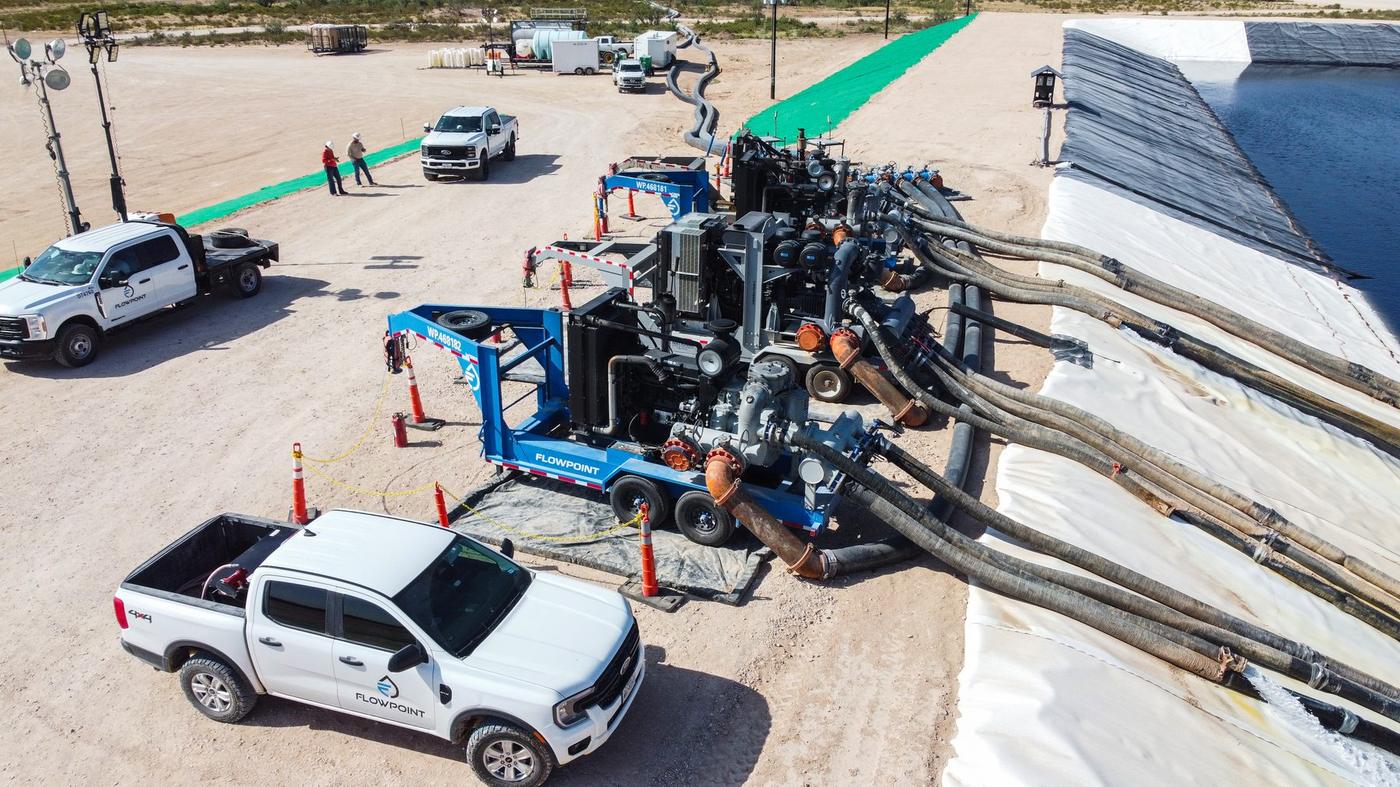
- Lines run straight and equipment staged square, so nobody has to climb over a problem to service a pump at night.
- A manifold that is labeled, with unused ports capped and flagged.
- A lead who will tell you, plainly, when something needs to stop.
Those four things are cheap to fake for a day and impossible to fake for a month. Culture is what is still there in week three.
The Bottom Line
Water handled right the first time, on every job, every day, is only possible when the people handling it are working safely. Safety culture is not a cost on top of the job. It is the reason the job runs the way it was quoted.
Flowpoint Services provides water transfer, sourcing, treatment, pit management, and poly pipe across the Permian Basin, with dedicated crews and dedicated safety resources on every project. ISNetworld and PEC verified. Get in touch.
.svg)

