

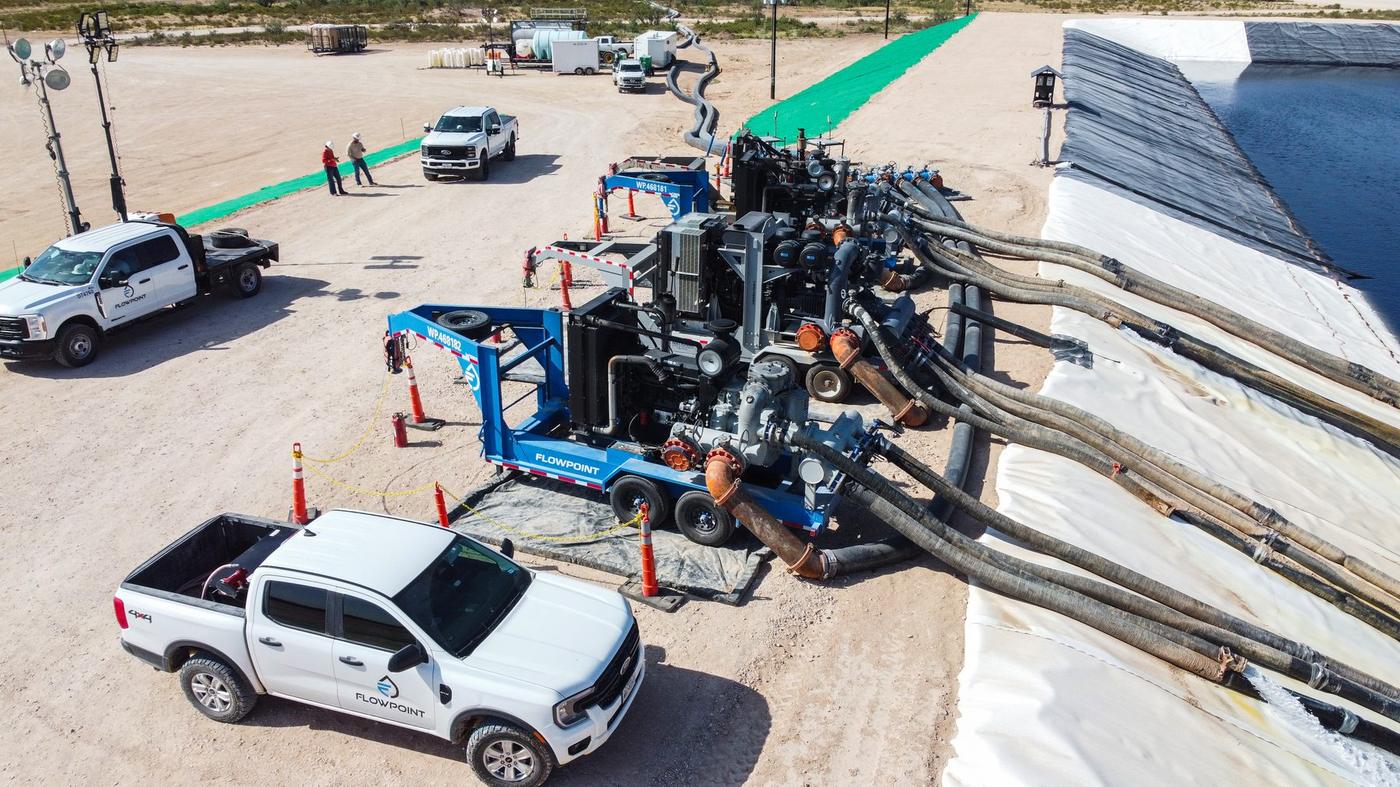
Five years ago, an operator who recycled produced water for frac supply was doing something notable. Today it is closer to the expectation than the exception, and the direction of travel is not in doubt.
Three forces are pushing it: disposal capacity, regulation, and economics. Each one alone would be enough to make recycling worth a hard look. Together, they make it a question of when, not whether.
Where the Water Comes From
Every barrel of oil produced in the Permian comes up with water. On average, three to five barrels of it; in mature fields, more. Basin-wide, produced water volumes now exceed 20 million barrels per day, and long-lateral completions keep pushing that number up.
For most of the basin’s history, that water had one destination: a disposal well. Move it, inject it, pay the invoice. It worked because disposal capacity was there and nobody was asking hard questions about what deep injection was doing underground.
The Disposal Problem
Both of those conditions have changed.
Disposal well capacity in parts of the Permian is constrained. Injection volumes in some areas have been linked to induced seismicity, and regulators in Texas and New Mexico have responded with permit restrictions, volume limits, and closer scrutiny of new disposal applications. The result is that the cheapest, simplest option is getting less cheap and less simple every year.
That is the first reason recycling is moving to the front of the line: the alternative is closing in.
Recycling Is Becoming a Baseline Expectation
Produced water volumes are rising in every major shale basin. Disposal capacity constraints and seismicity concerns exist in the Permian, the Bakken, and the Eagle Ford. Regulatory requirements for produced water recycling are becoming more common, signaling a shift in how the industry must approach water management.
Operators who wait to build recycling capability until it is required will face a harder and more expensive transition than those who build it now.
The Cost Case for Recycling
Regulatory inevitability aside, the economics of recycling are improving.
Disposal costs are real and rising in parts of the Permian Basin where well capacity is constrained. Fresh water sourcing costs are increasing as competition for available supply grows. The cost of on-the-fly chemical treatment — the technology that makes produced water recycling practical without slowing completion schedules — has improved as the technology has matured.
The operators treating produced water recycling as a cost to defer are comparing it against today’s disposal costs. The comparison that matters is against what disposal costs in three to five years.
What Operators Should Be Doing Now
The practical steps are straightforward:
- Understand your current produced water volumes and water-to-oil ratios
- Assess what percentage of your frac water demand could realistically be met by treated produced water
- Evaluate your current disposal costs against the cost of treatment and recycling infrastructure
- Work with your water management partner on what a recycling-capable operation looks like for your specific assets
Flowpoint provides produced water transfer, treatment, recycling, and full-cycle water management for E&P operators in the Permian Basin. If you want to understand what a recycling program looks like for your operation, we’re in Midland. Get in touch.
.svg)

