

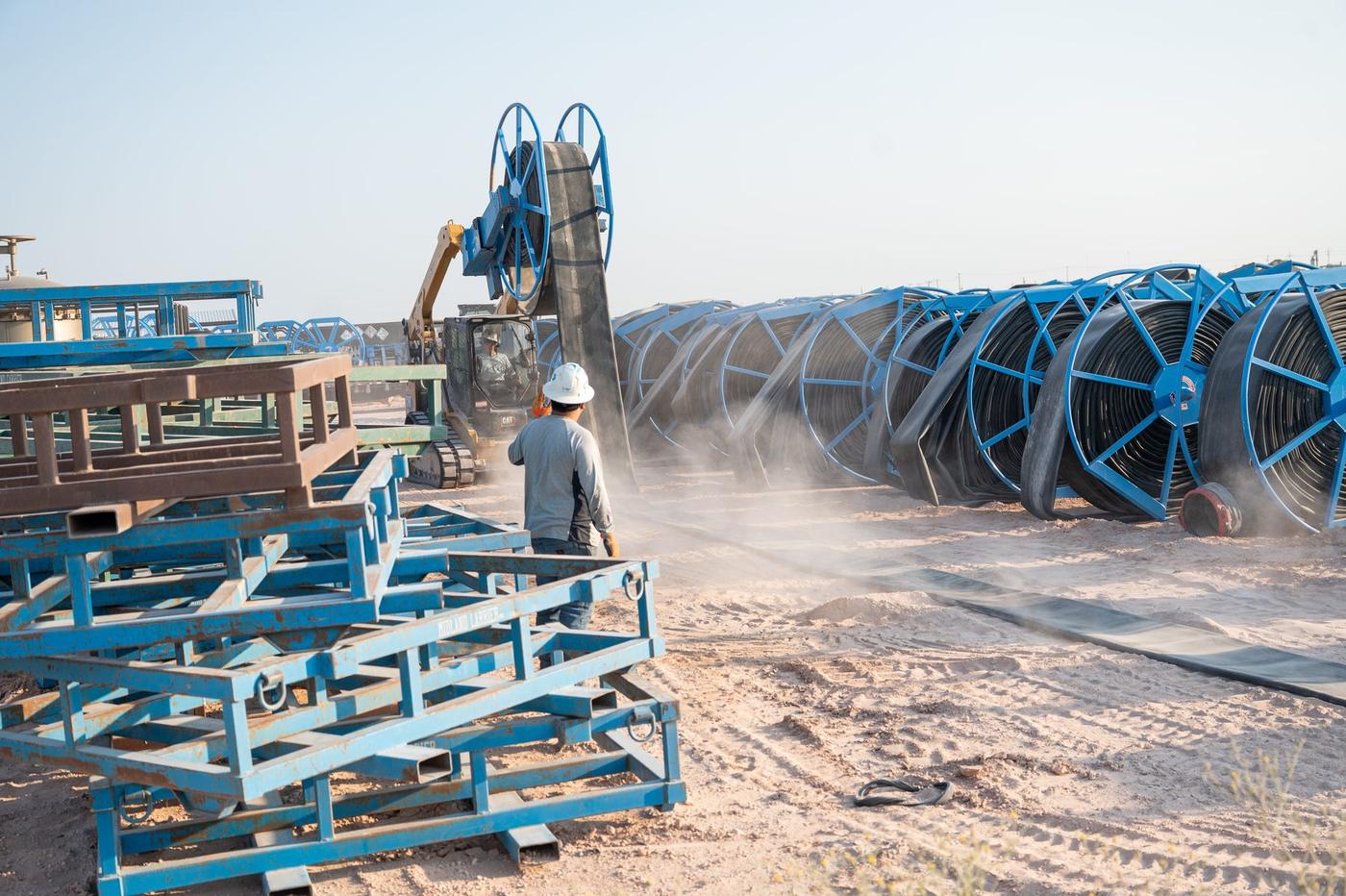
If you’re moving water on a frac job in the Permian Basin, you’re choosing between two primary conveyance options: HDPE pipe and layflat hose. Both work. Choosing the wrong one for your specific application adds cost, time, or risk that didn’t have to be there.
Here’s what each one does well, where each falls short, and how most Permian Basin operations end up using both.
What HDPE Pipe Does Well
HDPE pipe is rigid, durable, and built for permanent or semi-permanent water conveyance. Its characteristics make it well-suited for specific applications:
- Long-term or repeated use on the same route. Once HDPE is installed, it stays. If you’re moving water over the same corridor repeatedly, the upfront installation cost pays back in speed and reliability.
- Higher-pressure applications. HDPE pipe carries a higher pressure rating than layflat hose and handles sustained pressure without the management layflat requires.
- Permanent infrastructure. For gathering systems, permanent water supply lines, or any infrastructure that’s intended to be in place for an extended period, HDPE is the right material.
What HDPE doesn’t do well is deploy fast. Installation takes time, requires equipment, and isn’t practical for operations where the transfer route changes between jobs.
What Layflat Hose Does Well
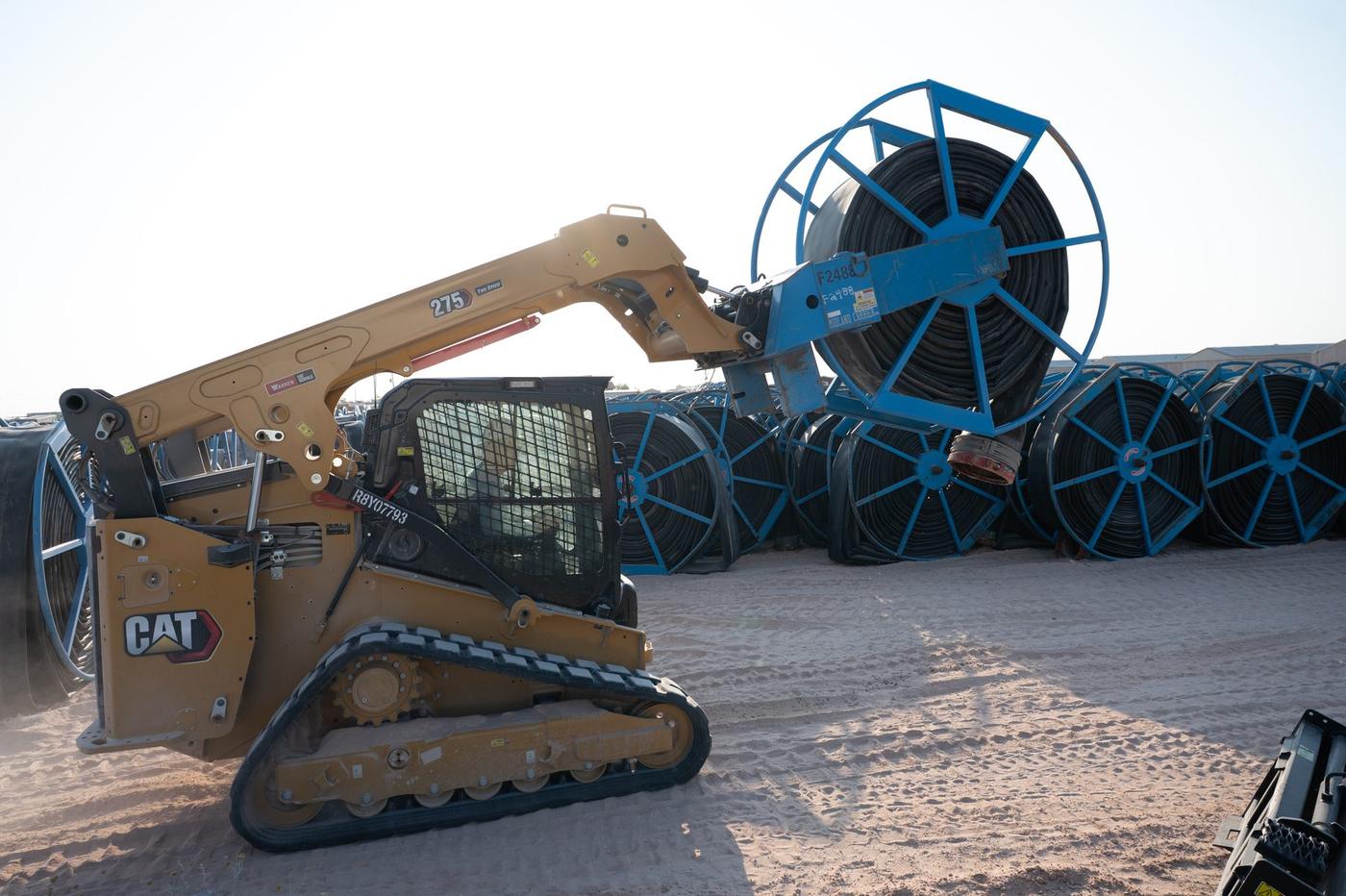
Layflat hose is flexible, collapses flat when empty, and expands to full diameter under pressure. Its characteristics make it the workhorse of Permian frac water transfer:
- Speed of deployment. A layflat crew can mobilize and have a transfer system running significantly faster than a rigid pipe installation. For completion operations where schedule compression is constant, this matters.
- Mobility. Layflat routes can be changed between jobs without the infrastructure investment of HDPE. It goes where you need it, when you need it.
- High-volume transfer. Modern 16” layflat systems can deliver up to 200 barrels per minute — the flow rates SimulFrac and TriFrac operations require.
The tradeoff is that layflat requires active management. It’s not rated for the same sustained pressures as HDPE, and it requires monitoring to catch issues before they become failures. That’s why automated monitoring is standard on any serious layflat transfer operation.
SimulFrac and TriFrac: Why Layflat Is the Standard
For simultaneous fracturing operations, layflat has become the default conveyance for a practical reason: speed of deployment at scale. High-volume 16” layflat systems can deliver the flow rates these operations require, with a fraction of the setup time of rigid pipe.
When you’re running two or three frac crews simultaneously and water demand is continuous, the ability to deploy and adjust quickly isn’t a nice-to-have. It’s the baseline.
When You Should Use Both
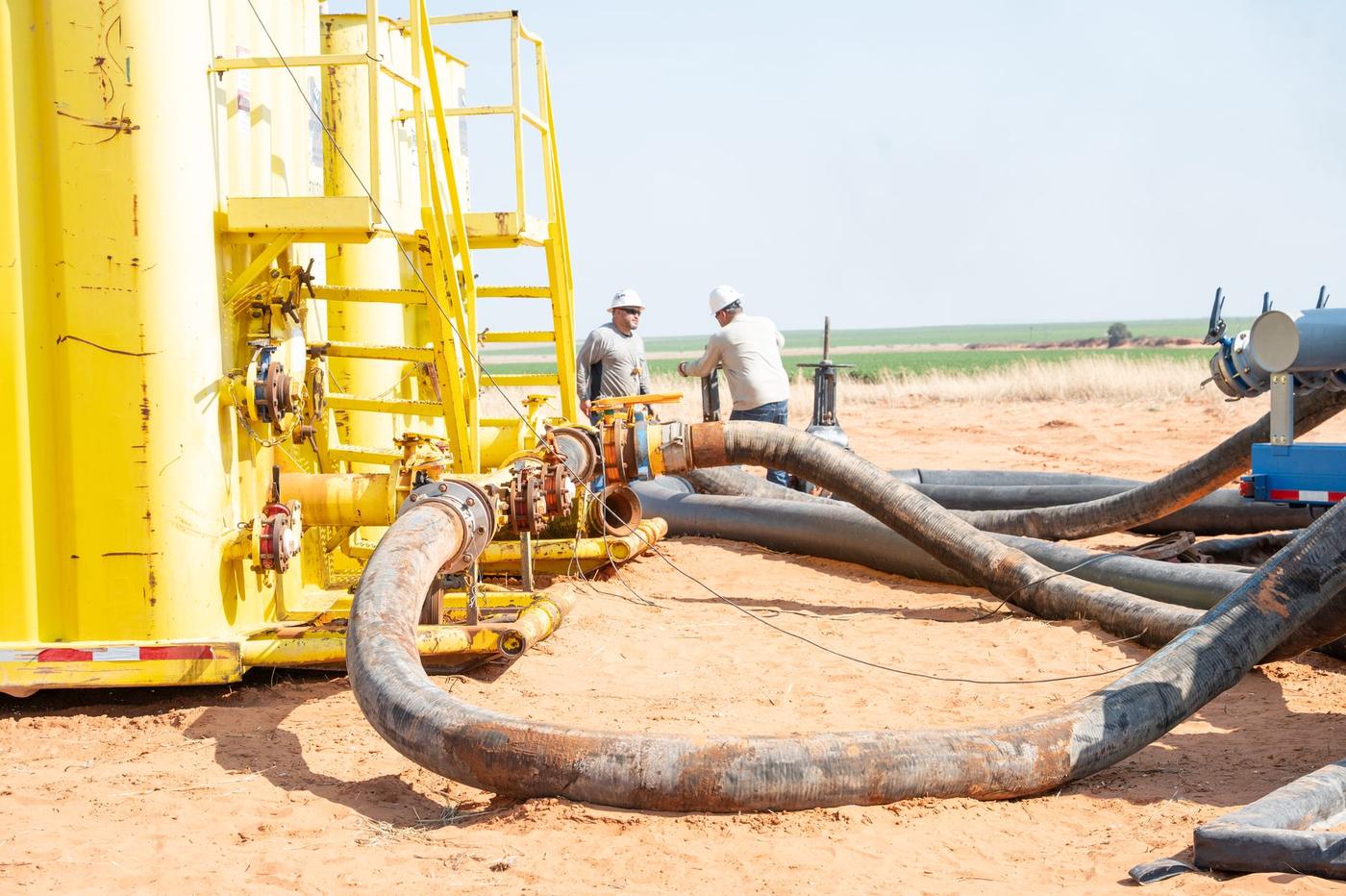
In most Permian Basin operations, HDPE and layflat aren’t competing options — they’re complementary ones.
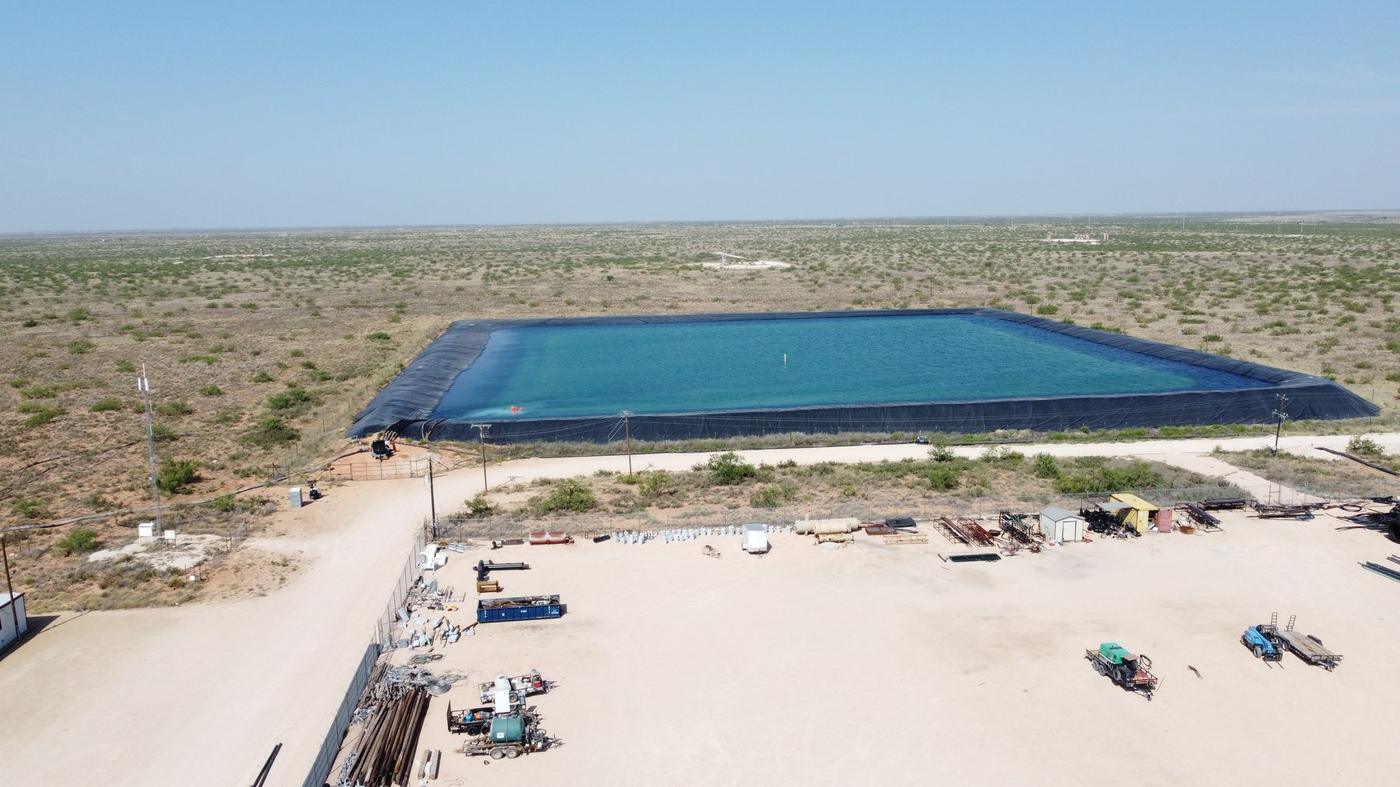
HDPE handles the permanent or semi-permanent gathering infrastructure: the water supply line from a source, the mainline corridor from a central pit, the infrastructure that doesn’t move. Layflat handles the last mile — the high-volume, rapid-deployment connection from that permanent infrastructure to the active wellheads.
The right design uses each material where it performs best and lets them work together.
Flowpoint provides layflat hose water transfer, HDPE pipe rentals and installs, and full-cycle water management for Permian Basin operators. Get in touch.
.svg)

