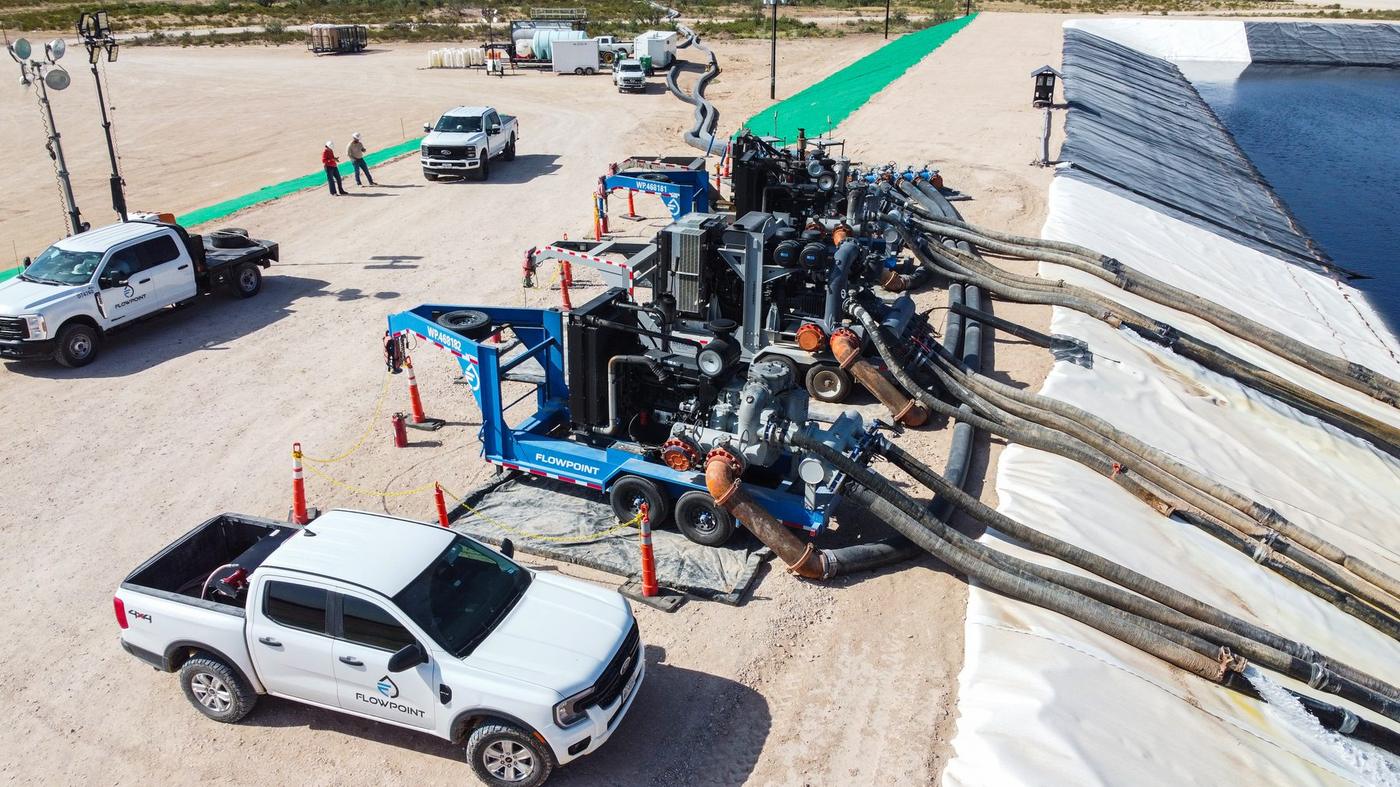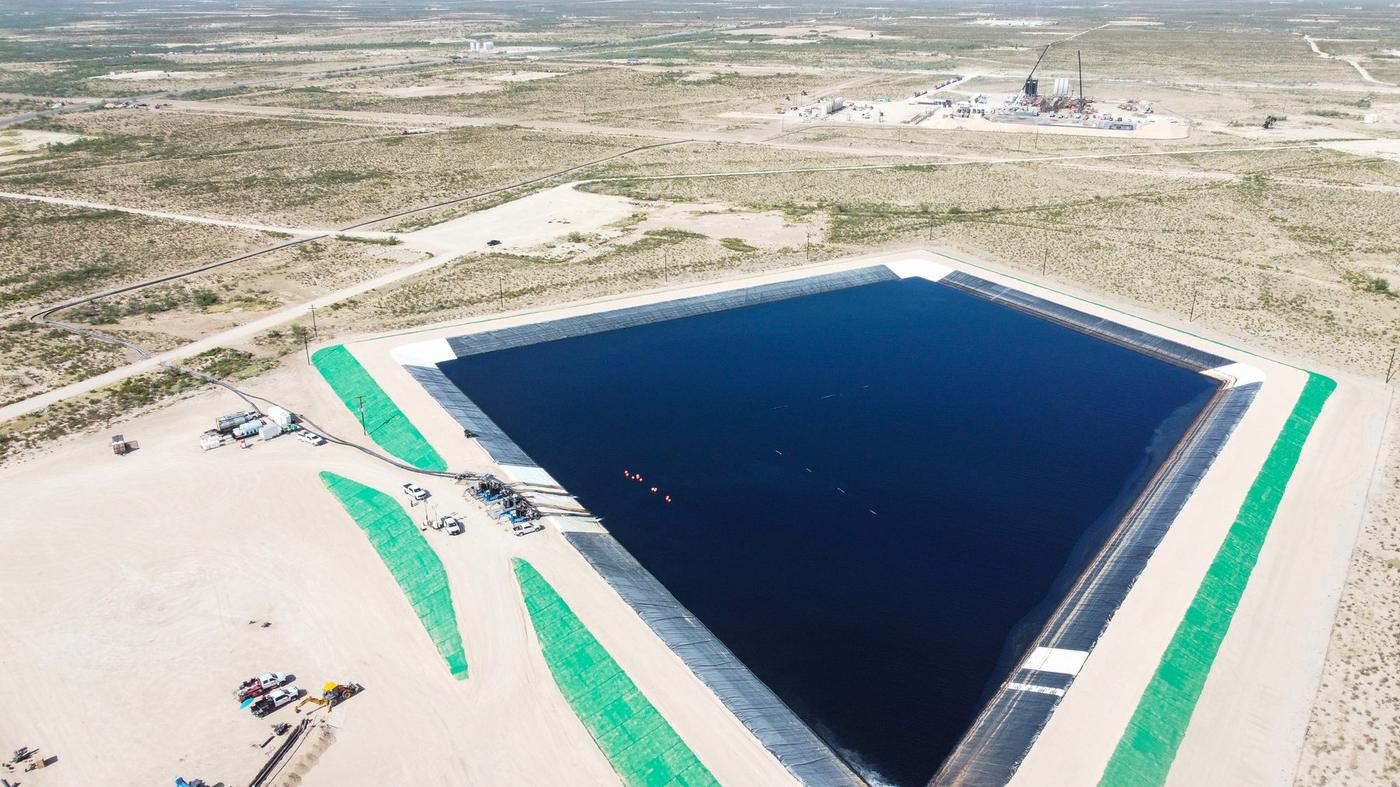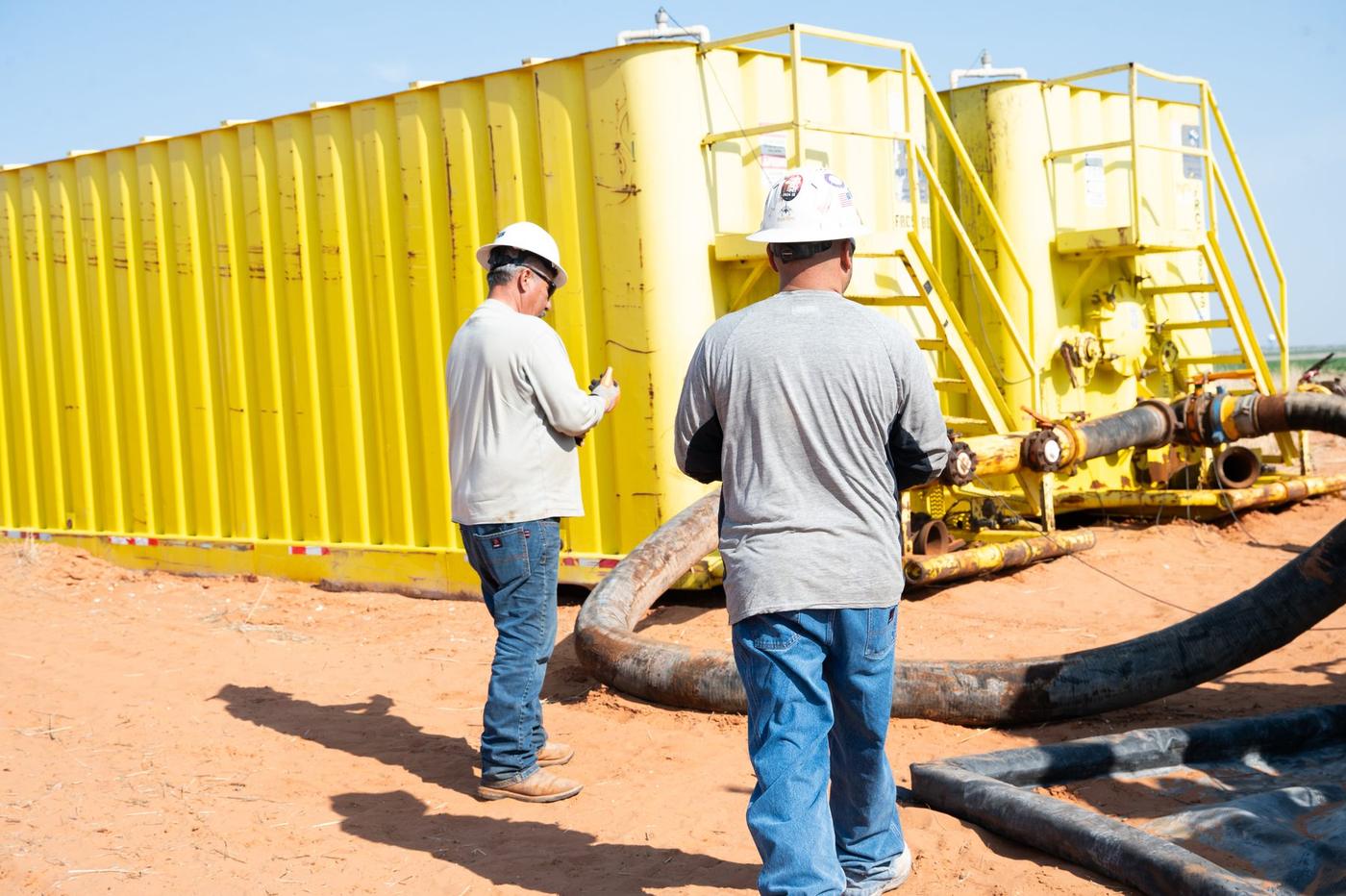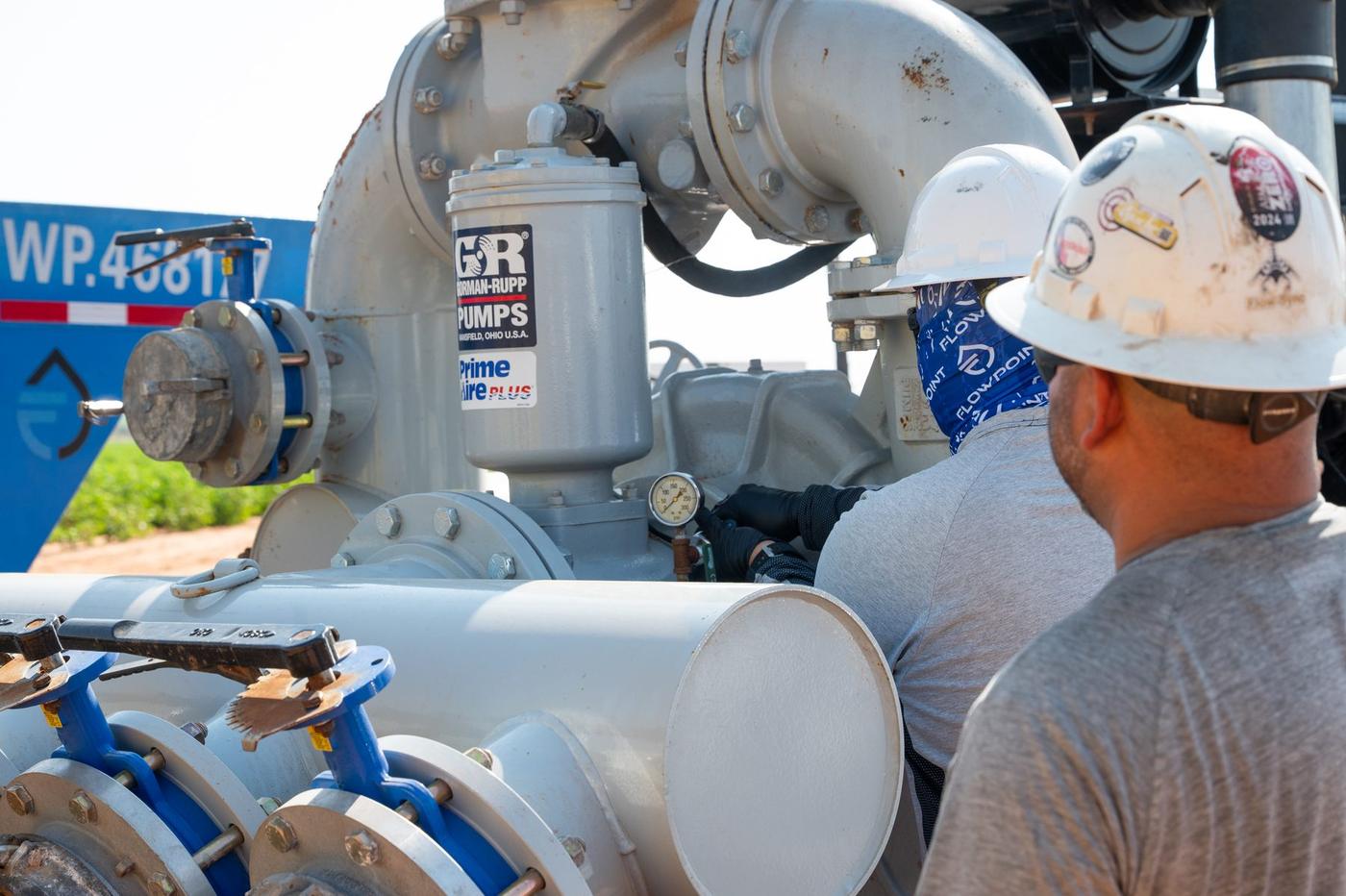
If you move produced water for a living, you work next to hydrogen sulfide. Not every job, not every barrel, but often enough that the day you stop respecting it is the day it becomes a problem.
This post is not a substitute for training. Every Flowpoint crew member gets that from our safety and training lead, and no operator should accept a crew on location that has not. But the basics are worth writing down, because the basics are what save people.
What H2S Is
Hydrogen sulfide is a gas produced when organic matter breaks down without oxygen. It occurs naturally in oil and gas formations, and it comes up with the produced water. When that water sits in a pit, moves through a line, or gets agitated at a pump, the gas comes out of solution and into the air around it.
It is colorless. At very low concentrations it smells like rotten eggs, which is why people think they will notice it. That is the most dangerous thing about it.
Why You Cannot Trust Your Nose
H2S deadens your sense of smell. At concentrations high enough to hurt you, the gas paralyzes the nerves that would have warned you, and the smell goes away. A crew member who thinks “the smell is gone, it must have cleared” may be standing in the highest concentration of the day.
It is also heavier than air. It collects in low spots: pits, cellars, tank bottoms, the downwind side of a berm, the inside of a containment. Those are the places people bend down, lean in, and climb into.
The exposure thresholds are unforgiving. Regulators treat concentrations around 100 parts per million as immediately dangerous to life and health. At several hundred parts per million, a few breaths can drop a person. At higher concentrations, one can.
The Monitor Is the Only Warning You Get
Because you cannot see it and cannot reliably smell it, the personal H2S monitor is not a backup. It is the only warning a crew member gets. That is why the rule on a Flowpoint job is short and does not bend: the monitor is on your body, it is on before the work starts, and it comes to every safety meeting so it gets checked and so wearing it stays a habit rather than a reminder.
A monitor in the truck protects the truck. A monitor that has not been bump-tested is a guess. A monitor on your chest, tested, is the one thing standing between a crew member and a gas they cannot detect any other way.
What a Crew Does When It Alarms
The response is trained, and it is the same every time: move upwind and uphill, away from the source, immediately. Do not go back for a tool. Do not go in after someone who has gone down; a second person going into the same gas is how one casualty becomes two. Account for the crew from a safe distance, call it in, and let people with supplied air handle the rescue.
Every crew member on a Flowpoint location has the authority to stop the job on an H2S alarm. Nobody has to ask.
What Operators Should Expect From a Water Transfer Crew
An operator does not need to run the training to check whether a crew takes H2S seriously. Look for four things:
- Monitors on bodies, visible, on everyone.
- A crew that can tell you where the low spots are on the location and stays out of them.
- A lead who knows the wind direction without looking.
- A contractor whose safety program has been verified by a third party. Flowpoint is ISNetworld and PEC verified, with dedicated safety and compliance resources behind every crew.
The Bottom Line
H2S is part of the job when the job is produced water. It cannot be seen, it cannot be trusted to smell, and it collects where people work. The monitor, the training, and the authority to stop are what make the job survivable. On a Flowpoint location, none of the three are optional.
Flowpoint Services provides produced water transfer, treatment, recycling, and full-cycle water management across the Permian Basin. ISNetworld and PEC verified. Get in touch.